
In 2026, Valentine’s Day will remain one of the most lucrative moments on the retail calendar, with U.S. spending projected at $27.5 billion and average consumer spend approaching $190. The brands winning this holiday are moving beyond blanket discounts and simple romance to design campaigns that guide shoppers, reflect modern relationships and create interaction.
Here are the five trends shaping high-performing Valentine’s Day strategies in 2026 and how leading brands are putting them into practice.
Think Beyond Couples and Traditional Romance
About one-third of consumers now plan to buy gifts for friends, and celebrations like Galentine’s Day, self-love moments and even pet gifting continue to expand the audience.
Brands that broaden their definition of love unlock incremental demand without needing to invent a new holiday. Campaigns centered on friendship, appreciation or self-care are more inclusive and culturally aligned. The message shifts from “buy this for someone else” to “celebrate someone who matters,” including oneself.
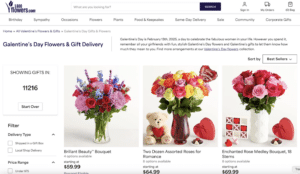
1-800-Flowers.com leaned into the friend-celebration trend, with dedicated Galentine’s Day bouquets and promotions, effectively expanding the holiday and segment focus.
Personalization Moves From Nice-to-Have to Table Stakes
Valentine’s Day is inherently emotional, which makes personalization especially powerful. Shoppers are willing to spend more when a product feels intentional rather than generic. In 2026, personalization extends beyond monograms to messaging, recommendations and journey design.
Some brands lean into this with customizable products, while others personalize the path to purchase. Quizzes, curated collections and recipient-based gift guides reduce choice overload and help anxious shoppers feel confident they’re making the right decision.
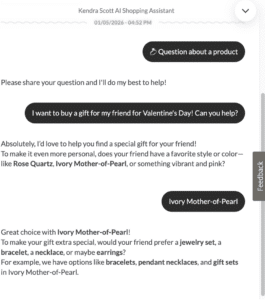
Kendra Scott’s AI Shopping Assistant guides customers to make personalized gift choices.
Bundling and Curation Drive Higher Order Value
Curated bundles and limited-edition sets simplify decision-making while increasing AOV. Gift guides, gift sets and self-care bundles frame products in real-world moments, making the value immediately clear. These collections also translate well across channels, from gift guides and email to paid media and in-store displays.
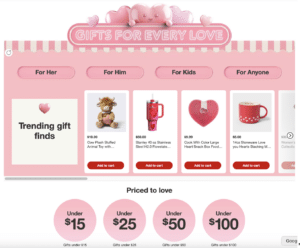
Target offers a gift guide for different recipients at various price points.
Gamification and Interactive Experiences Cut Through Promo Fatigue
Shoppers have become deeply familiar with the holiday discount cycle. Static promo codes still drive volume, but they rarely build connection or loyalty. Interactive experiences are emerging as a more effective alternative.
Gamified mechanics like gift finder quizzes, mystery discounts, scratch-to-reveal offers and short-form games turn browsing into participation. These experiences catch consumers’ attention, entertain and make rewards feel earned rather than expected.
Retailers using gamification often see higher engagement and cleaner data, because shoppers willingly share context when they receive something valuable in return. For high-consideration categories, this guidance can be the difference betwe
en abandonment and conversion.
Storytelling and Community Take Center Stage
Valentine’s Day remains a storytelling holiday, but the stories are becoming more inclusive and more authentic. Instead of idealized romance, successful campaigns highlight everyday moments, humor and community.
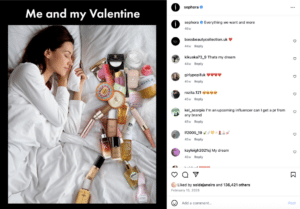
Sephora leaned into humor for their 2025 Valentine’s Day social campaign on Instagram, highlighting how humorous storytelling can drive audience engagement over the holiday.
Other brands lean into appreciation and loyalty, using Valentine’s Day to thank customers, celebrate milestones and drive referrals, reinforcing long-term relationships rather than one-time sales.
Leverage the Power of Celebrities
By early February, consumers are flooded with similar imagery, offers and messages. One of the most effective ways brands are breaking through in 2026 is by leveraging celebrities as cultural shortcuts for trust, aspiration and relevance. This approach is especially effective with Gen Z, a generation that engages less with traditional advertising and more with personalities who shape culture in real time.
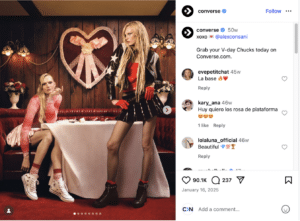
In 2025, Converse partnered with Alex Consani, a supermodel and popular Gen Z influencer, to reach young, conscious Gen Z consumers.
When done well, celebrity-led Valentine’s campaigns accelerate emotional connection and compress decision-making. The key is alignment. Shoppers respond to celebrities who authentically embody the brand’s values and the way love is expressed today. When applied to Valentine’s Day, this approach turns gifting into a moment of discovery rather than obligation.
What This Means for Retail Leaders in 2026
Valentine’s Day marketing in 2026 rewards brands that understand context. Shoppers want help choosing, permission to celebrate in their own way and experiences that feel human rather than transactional.
The takeaway is clear: move beyond one-size-fits-all promotions. Invest in personalization, inclusive messaging, curated solutions and interactive moments that respect your customer’s intent. Valentine’s Day is now a brand moment, and the retailers who treat it that way will capture both revenue and relevance.
To learn more top retail strategies, register for the 2026 CommerceNext Growth Show, June 23-24 in NYC.